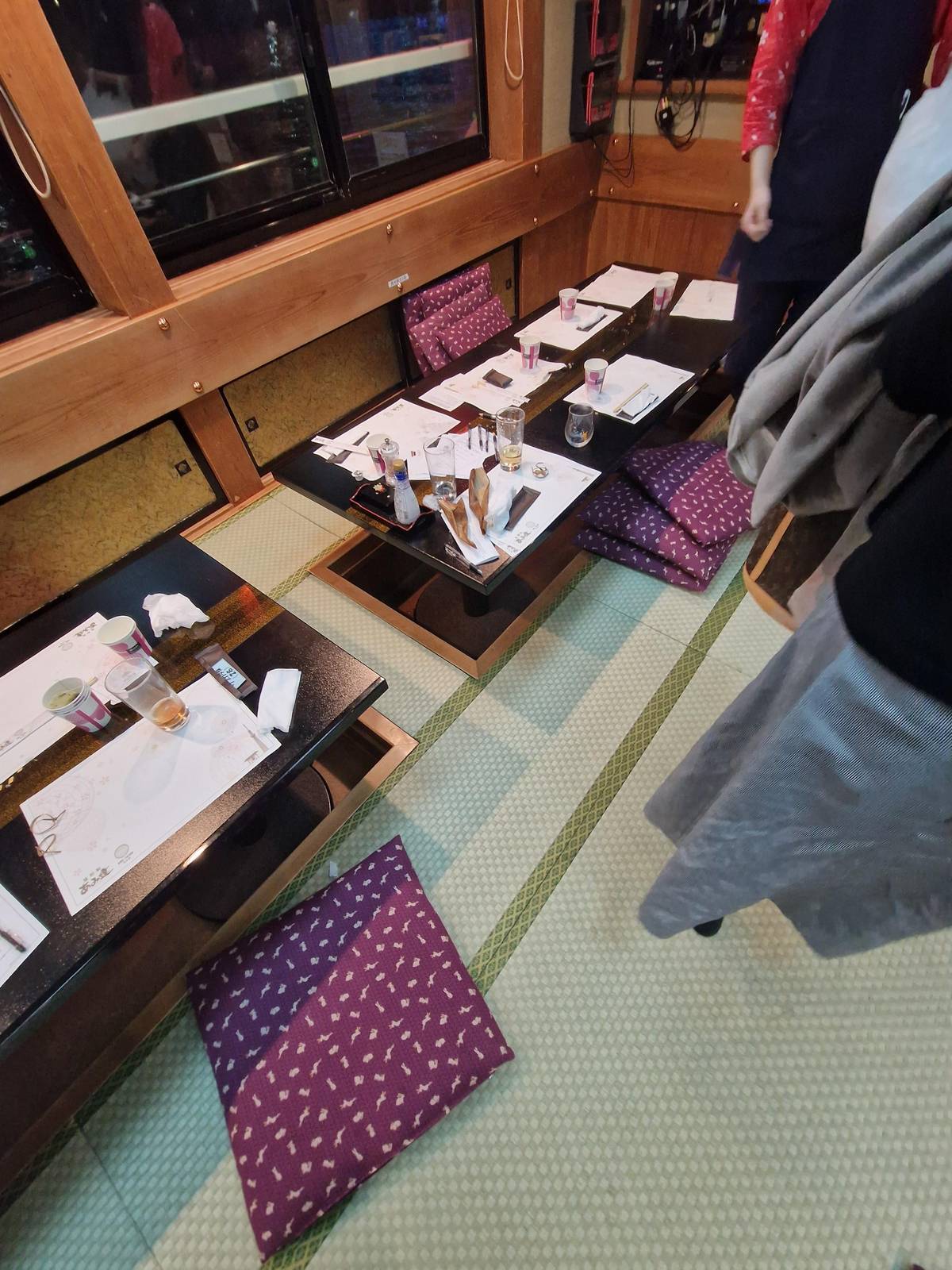
 Legs below the table
Hori-gotatsu
Tatami with a leg well
- Floor
- Tatami
- Legs
- In a well below
- Found on
- Harumiya, Funasei
Guides
Language
EnglishCurrency
US dollar · $Prices on GetYourGuide appear in your chosen currency.
Guide · Before you go
Deciding what to wear on a dinner cruise in Tokyo is less about smart or casual and more about the boat: shoes that come off easily, clothes you can sit in on a tatami floor, and a layer for the roof deck.
Editorial team, yakatabunedinnercruise.comUpdated October 22, 20266-minute read17 sources
Quick answer
If you are wondering what to wear on a dinner cruise because you have read about ocean liners with formal nights, relax: a yakatabune is nothing like that, and if you searched for a dress code for a cruise dinner, the short answer is that there is none. None of the Tokyo listings on this site sets a dress code, and one private yakatabune listing says it plainly: no specific dress code, dress comfortably. Office clothes, a summer dress or jeans all fit in.
What shapes your outfit is the room. Yakatabune interiors are built around tatami flooring and low dining tables, in the style of old aristocratic Japanese houses.3 On boats with hori-gotatsu seating there is a well under the table for your legs, so you sit on the mat with your feet hanging down rather than kneeling through dinner.4
So think about sitting low, getting up for the deck stops and bending to take off your shoes. Clothes that let you do that without fuss are the right clothes. Very tight skirts or stiff trousers make a long dinner on the floor less comfortable, whatever they look like.
The evening
20 min before
The Asakusa boat leaves on time.
Boarding
On some boats, slippers are provided.
Dinner
Tatami with a leg well under the table.1
Deck stop
Photos of the bay and the bridges.
About 25 min
The longest stop on the shared course.5
This is the rule that surprises first-timers. The Etchujima cruises are direct about it: in line with Japanese custom, you will need to remove your shoes to take part. The Shinagawa bay cruise says that, depending on the boat, guests remove their shoes on boarding and change into slippers provided on board.
The listing for the Asakusa cruise this site sells does not mention shoes or seating, so plan as if you might take them off, and you will be fine either way. Its operator, Amitatsu, runs boats with hori-gotatsu seats and others with table seats, and shared-boat guests cannot choose which one they board.678
In practice that means slip-on shoes or loose laces, and socks you are happy to show. Boots with long laces cost you time at the door while the line behind you waits, and bare feet on a shared floor are less pleasant than a clean pair of socks.
Month by month
Shoes and seating
| Cruise | Shoes | Seating | Shared tables |
|---|---|---|---|
| Sumida River dinner | Not stated | Not stated | Not stated |
| Bay dinner, Shinagawa | Off on some boats | Some boats sunken floor | Up to 6 guests |
| Sukiyaki and show | Removed | Not stated | May be shared |
| Tea ceremony cruise | Removed | First come seats | May be shared |
As each GetYourGuide listing states it; Not stated means the listing does not mention it.
Seats you may find
Legs below the tableTatami with a leg well
 No floor sitting
 Bring a layer
Decision helper
Pick the situation that sounds like yours
August averages a high of 31.3 °C in central Tokyo.2
January averages a low of 1.2 °C, and the roof is open air.2
Some boats have chairs; others have none at all.9
Several cruises ask guests to remove shoes at the door.
Our cruise stops so guests can go up on the roof.
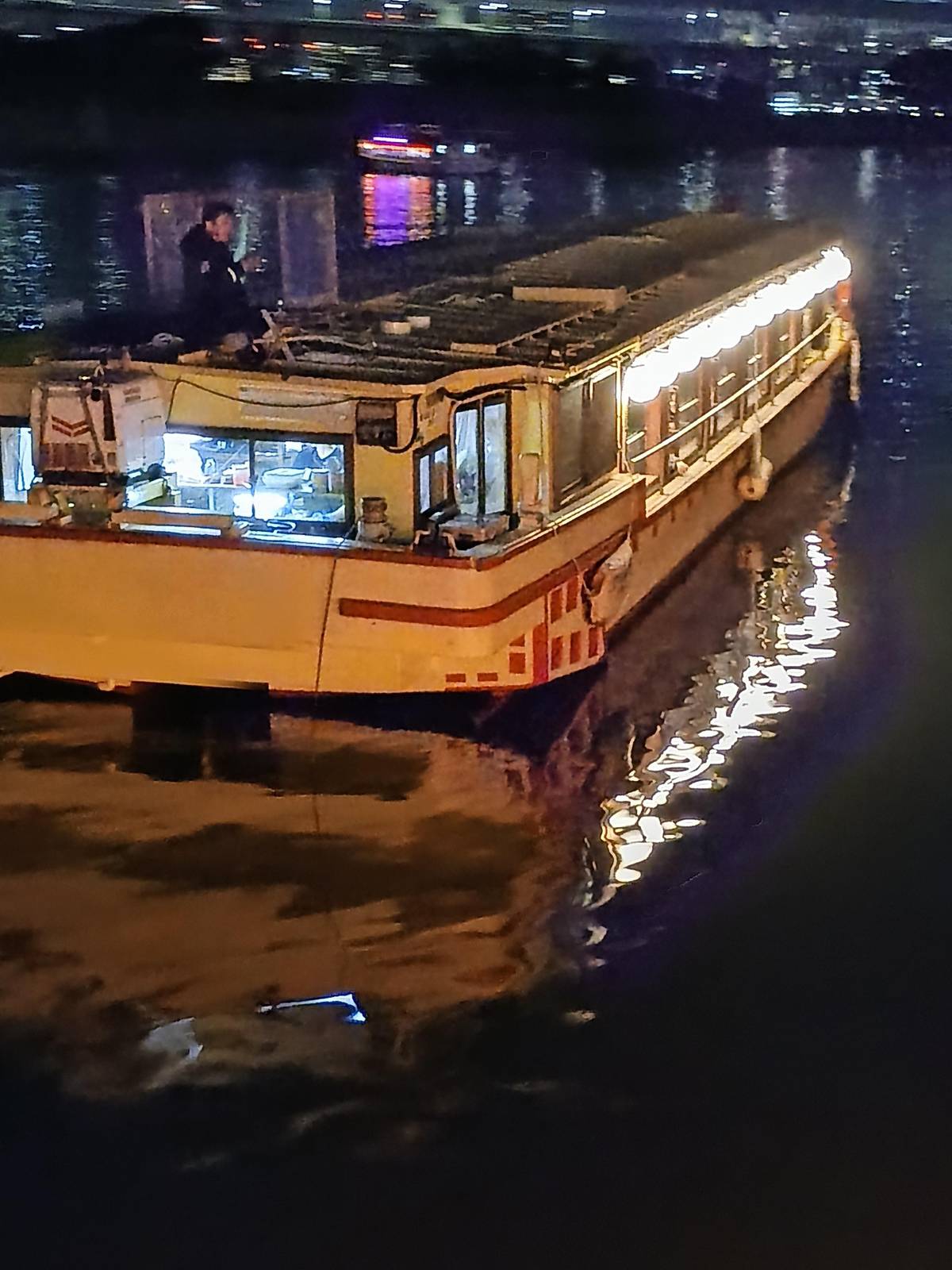
The boat combines a relatively modern exterior, complete with a rooftop observation deck, with a traditional interior featuring tatami mats and low tables with sunken floors underneath for guests to stretch their legs.
Seating varies by operator and by boat. Tokyo Updates describes a Harumiya boat with tatami mats and low tables over sunken floors so guests can stretch their legs.1 All five Harumiya vessels have hori-gotatsu and a sky deck, and Funasei fits hori-gotatsu on 6 of its 7 boats, with tables and chairs on the seventh.109
The Shinagawa bay cruise warns that some boats have hori-gotatsu seating and that chairs are not available on those boats. If anyone in your group cannot sit on the floor, ask the operator before you book rather than at the pier. It is worth asking which boat sails on your date, though Amitatsu notes that on its shared cruises the boat itself cannot be chosen.8
Dress for that posture. Trousers or a long skirt with some give, a top you do not mind leaning across a table in, and nothing that needs ironing after you stand up. Keep a small bag on your lap or by your knees; Harumiya, for example, has no cloakroom on board.11
Checklist
Video
Nothing is loaded from YouTube until you press play on the video.
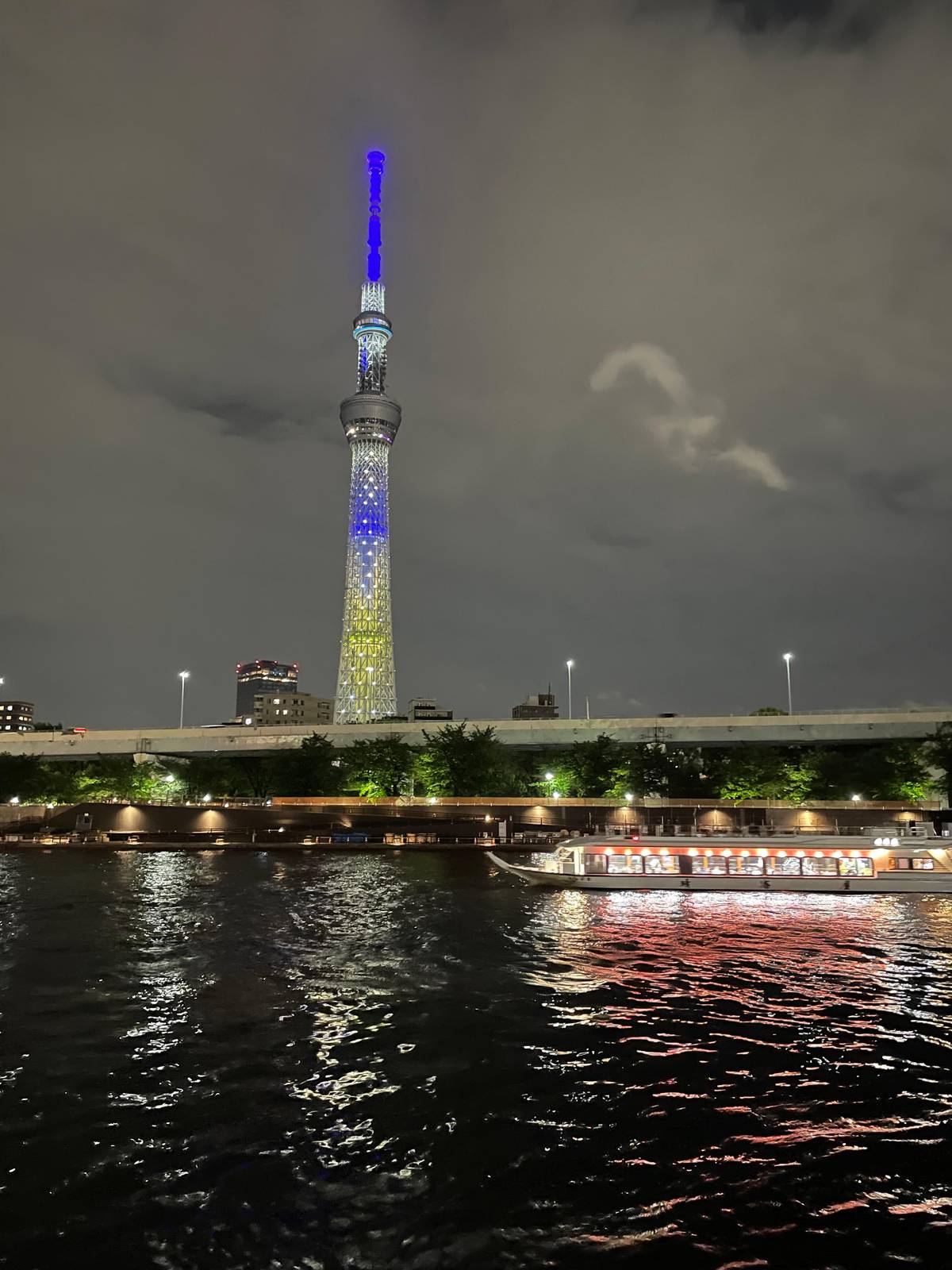
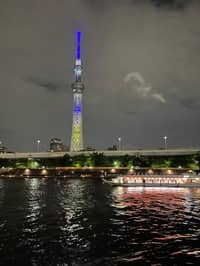
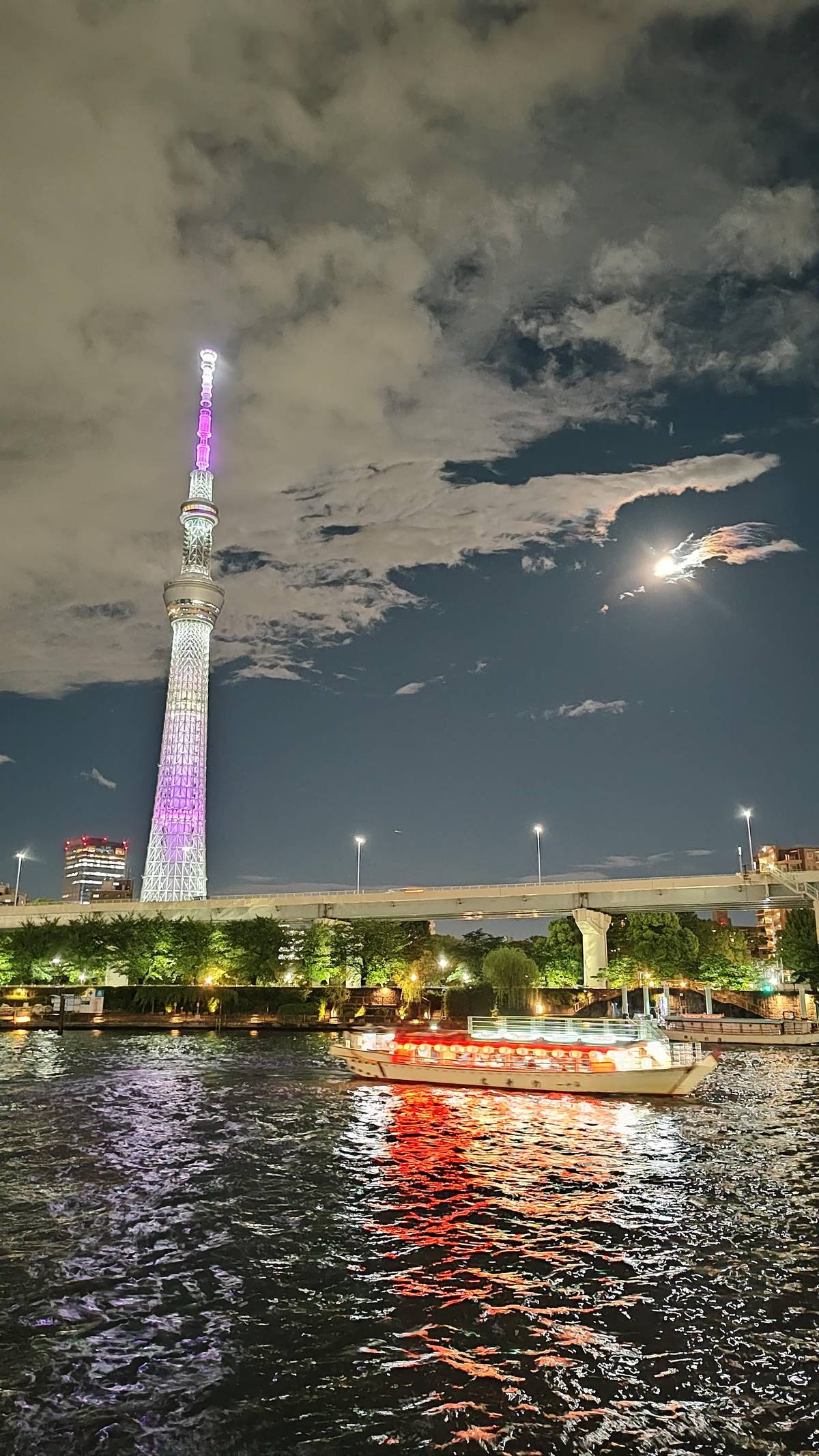
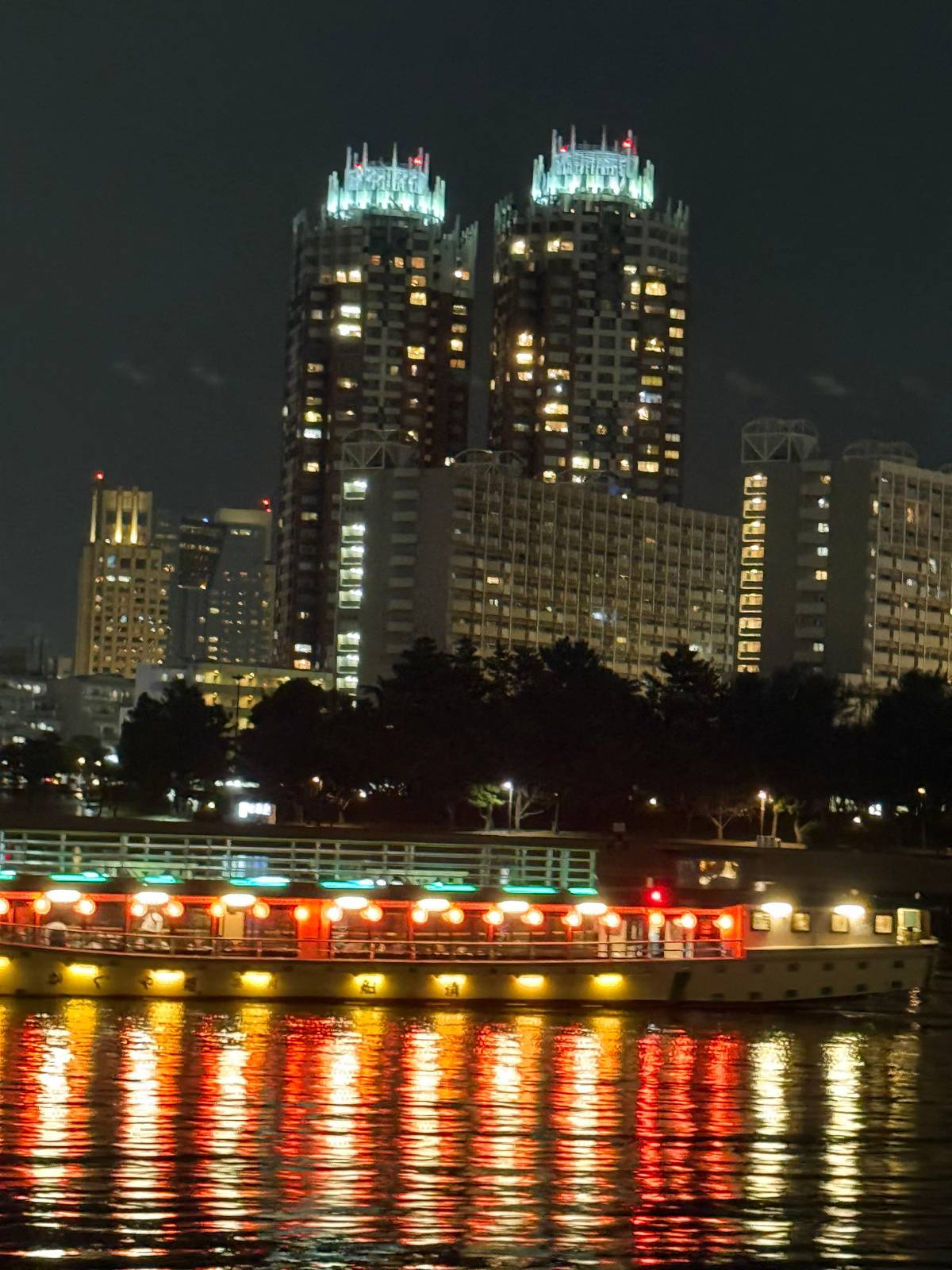
The best views come from outside. The cruise this site sells makes a stop where guests can go up on the roof of the boat for the view and photos, and another at Tokyo Skytree. Its operator describes mooring off Odaiba Seaside Park for about 25 minutes, when guests can climb to the sky deck for a 360-degree view of Rainbow Bridge if the weather is good.5
That climb is the reason to think about shoes and layers together. You go from a warm cabin to an open roof on the water, often in slippers or socks, and back again. A light jacket you can pull on quickly and a phone strap or a small bag keep your hands free on the steps. Remember that the deck is above the cabin, so you climb steps to reach it, and you will want both hands free on the way up.
Skirts and loose scarves catch the wind on deck, so pin or tuck them. In the evening the city's lights are the show, and a dark, non-reflective top also helps if you want photos through the cabin windows without your own reflection.
Tokyo's year swings widely. Japan Meteorological Agency normals for central Tokyo give an average daily high of 9.8 °C and a low of 1.2 °C in January, so a warm coat for the deck matters.2 By April the high is 19.4 °C and the low 9.8 °C, light-jacket weather on the water.2
Summer is hot and humid. August averages a high of 31.3 °C and a low of 23.5 °C, and the dinner cruises set sail just as the sun is setting.212 Breathable clothes and a fan are worth more than a jacket, though Hamashin, for one, says its boats are air-conditioned.13
Autumn brings rain. September and October are the wettest months in the normals, with 224.9 mm and 234.8 mm, and about 11 days with at least 1 mm of rain in each.2 A compact umbrella for the walk to the pier and quick-drying shoes are sensible from late summer on. On a wet evening a hood is more useful than a hat, because the wind on the water takes hats.
Can you wear jeans to dinner on a cruise like this? Yes. Nothing in the Tokyo yakatabune listings asks for formal clothes, and one tells guests to dress comfortably. The real question is whether your jeans are comfortable on the floor for a long meal. Stretch denim is fine; stiff, tight jeans are not much fun with your legs in a leg well.
Children, too, should simply be comfortable. The Shinagawa bay cruise offers a special meal for children aged 3 to 5, and Amitatsu lets children up to 3 ride free, without a meal or seat.14 A spare pair of socks for small children is a good idea if shoes come off.
If you are celebrating, dress up if you like. The point is that the boat, not a dress code, sets the limits: easy shoes, clothes that bend, a layer for the deck. A photo with Rainbow Bridge behind you looks just as good in a sweater as in a suit.
A few simple habits fit the room. On shared cruises you may sit with other parties; the Shinagawa cruise mentions tables of up to 6, and the Etchujima cruises warn that shared tables may be needed. Keep your things within your space and offer a greeting to your neighbours.
Smoking is not part of the cabin. Amitatsu's tatami rooms are non-smoking with a set smoking place on board, Harumiya allows smoking only outside, and Hamashin only on deck.151617 Karaoke is not used on Amitatsu's shared boats either.15 If you need a cigarette, ask the crew where the smoking place is before the boat leaves the pier.
Finally, arrive on time, because the boats do not wait. The Asakusa cruise asks you to come at least 20 minutes before departure, and the Shinagawa cruise closes check-in 30 minutes before. Being early also gives you time to sort out your shoes.
Your night on the river
Choose a date, board in Asakusa, and cancel free up to 10 days before.
No formal one. One Tokyo yakatabune listing says there is no specific dress code and to dress comfortably.
On several boats, yes. The Etchujima cruises require it; the Shinagawa cruise does it depending on the boat, with slippers.
Usually not. Hori-gotatsu seating has a space under the table for your legs.4
On some boats. Funasei has one boat with tables and chairs; Amitatsu has one with table seats.97
A warm coat for the deck. January averages a high of 9.8 °C and a low of 1.2 °C in central Tokyo.2
Only in set places. Cabins are non-smoking; smoking is allowed outside or in a set spot on board.1516
Bring a small one instead. Harumiya has no cloakroom at the pier or on board; a small suitcase may come aboard.11
Sources